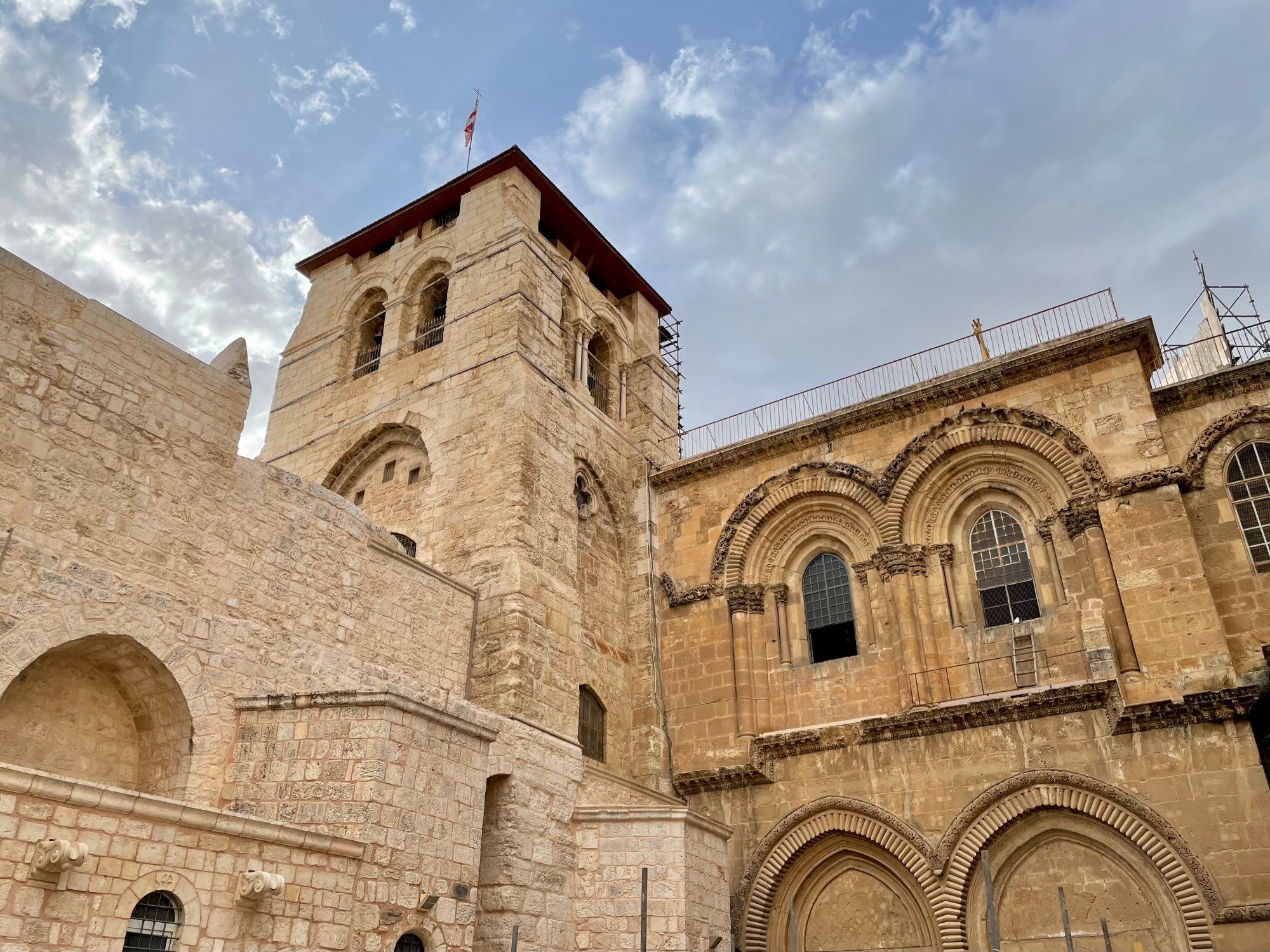
Last but most certainly not least; the Holy Sepulchre. It is here that the ideals of one’s imagination may be crushed, that the symptoms of Jerusalem syndrome set it, but also where one can join a chain of pilgrims throughout nearly two millennia who have come to this place.
Originally it was many churches as different groups fought over the land in the way only humans can, however they all reside under one roof now. This can lead to some rather interesting commissions of Eastern and Western calendars and liturgical celebrations.
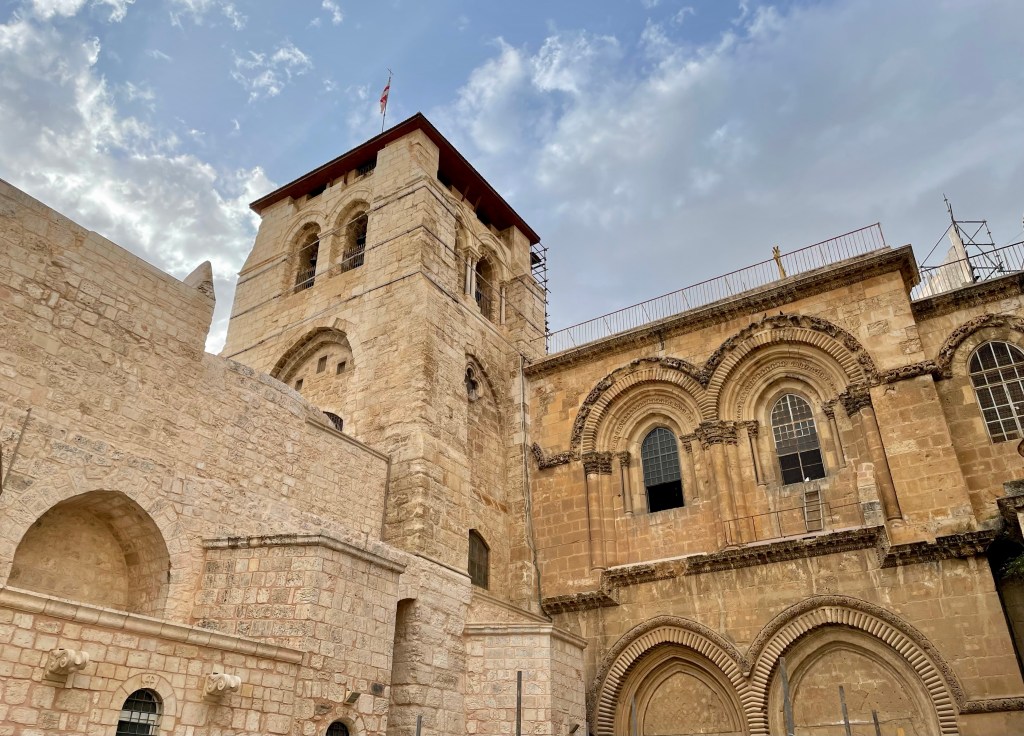
The church covers the sites of Jesus’ crucifixion and resurrection – his tomb. It is rather impossible to imagine what the site would have been two thousand years ago- because one loses all sense of a hill, or a tomb carved into rock with lots of other tombs nearby. This is in part because the city itself has been razed to the ground so often – and the city walls have expanded since the time of Christ, but it is also in part to the heady incense, glistening marble and eye catching silver of icons.
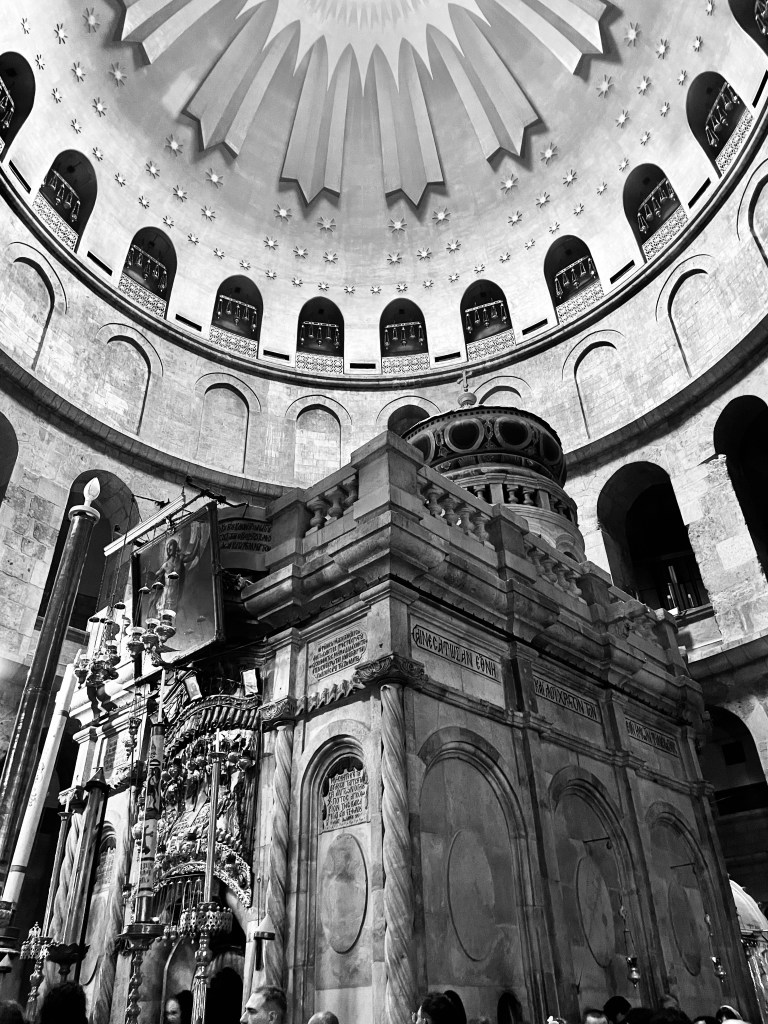
If one wishes to go into the tomb, there is nearly always quite a significant queue. I had been before so did not feel the need to wait this time.
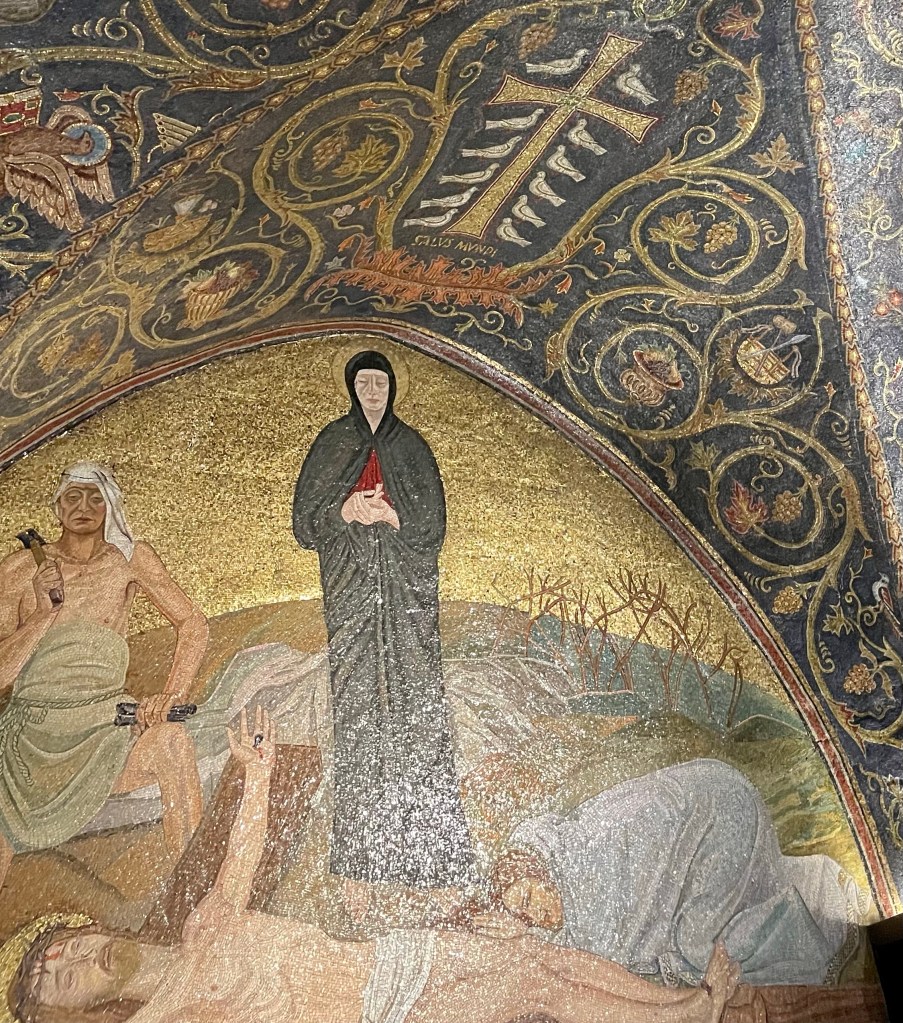
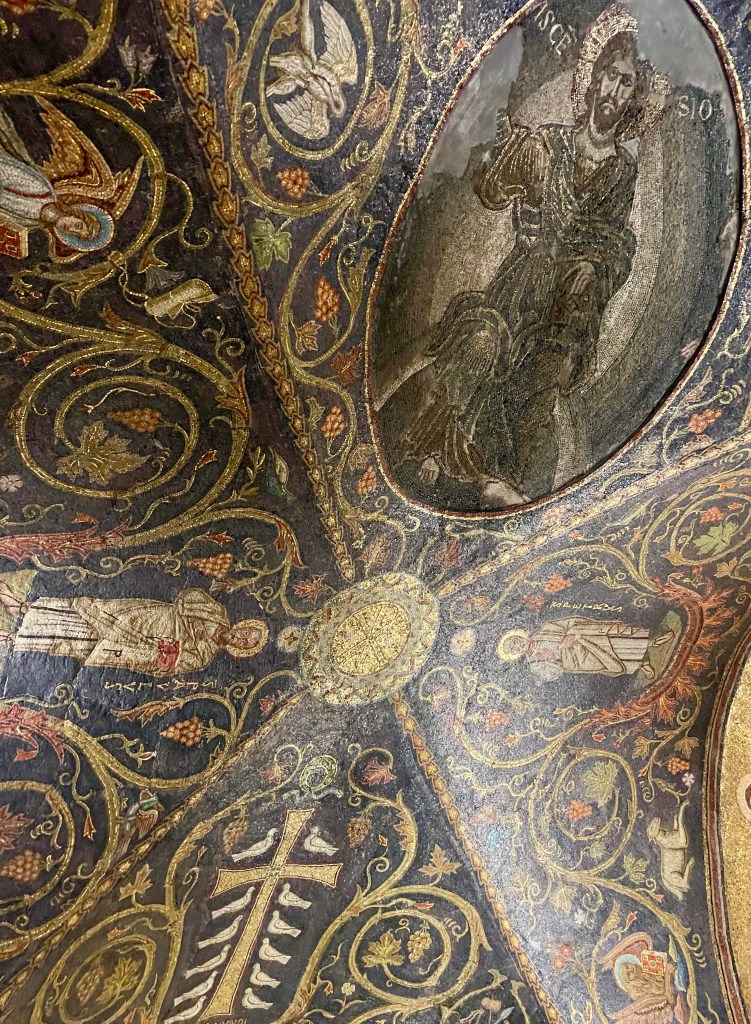
When you enter the church on the right there are some rather steep, slippy and very uneven in depth stairs to reach Golgotha, or Calvary, whichever your preference. As with much of this site it is divided between the East and West, the Latin part of the site is where the mosaics are, whereas where the cross and rock are are much more Eastern in flavour.
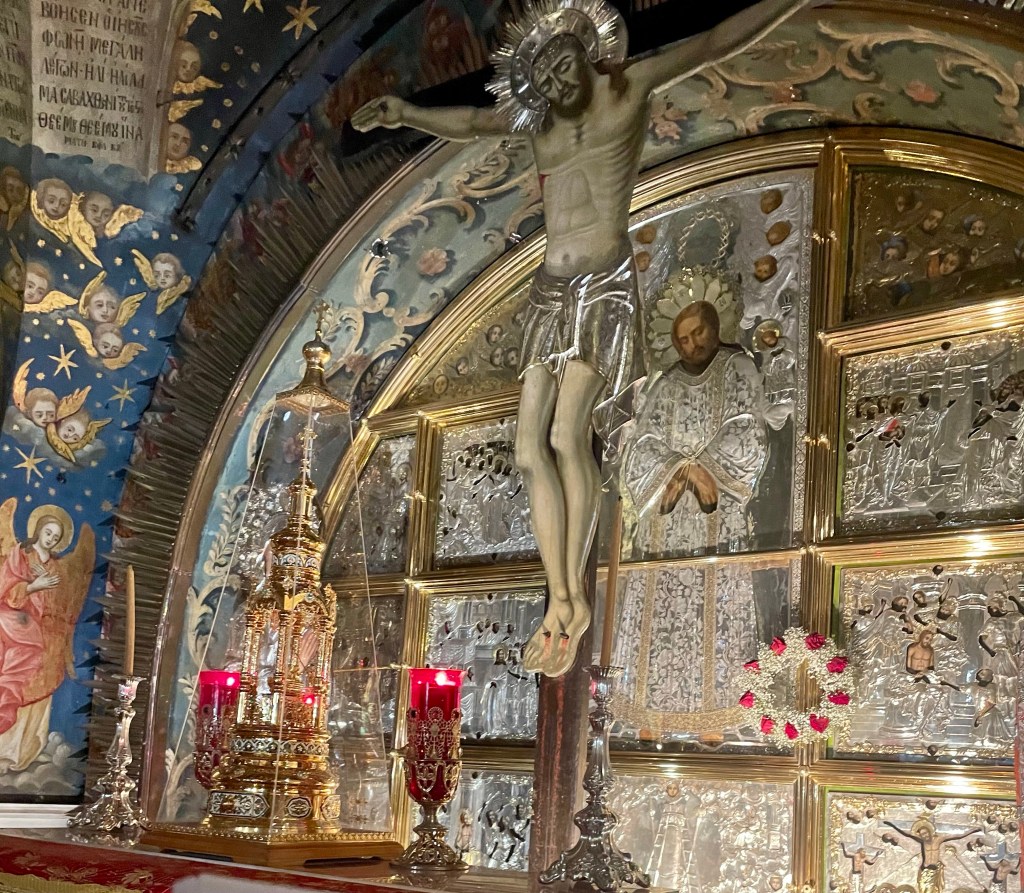
After a bit of an unholy (and un-British) shoving queue one can kneel down and place one’s hand in the rock there the base of the cross would have been. It is not a place for quiet contemplation, you are quickly ushered along by a Franciscan or some other monk or friar.
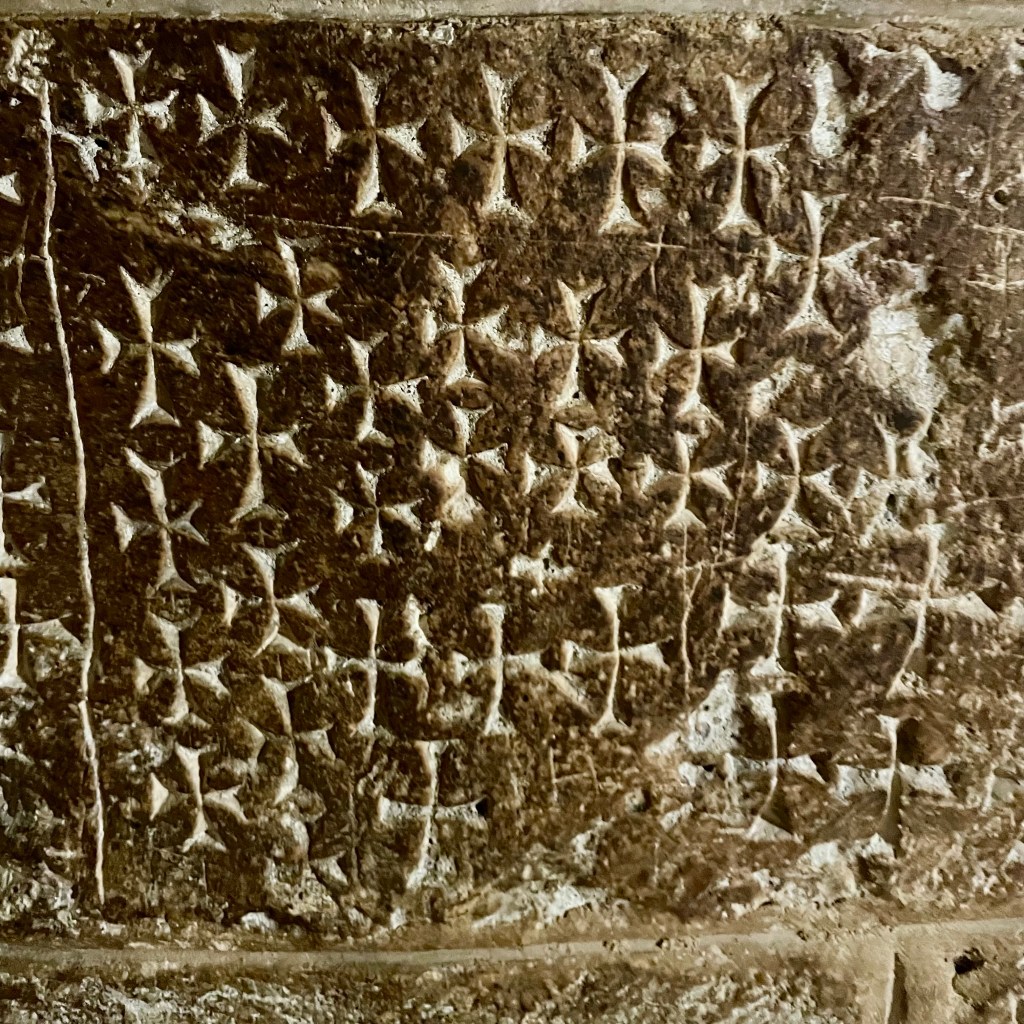
Lest I make it sound as if peace and quiet is impossible in this building- the place to go is is St Helena’s crypt, and even further down to a bit of the Roman quarry where she found the cross. It now belongs to the Armenians and you need to descend some terrifying steps, surround by crusader graffiti.
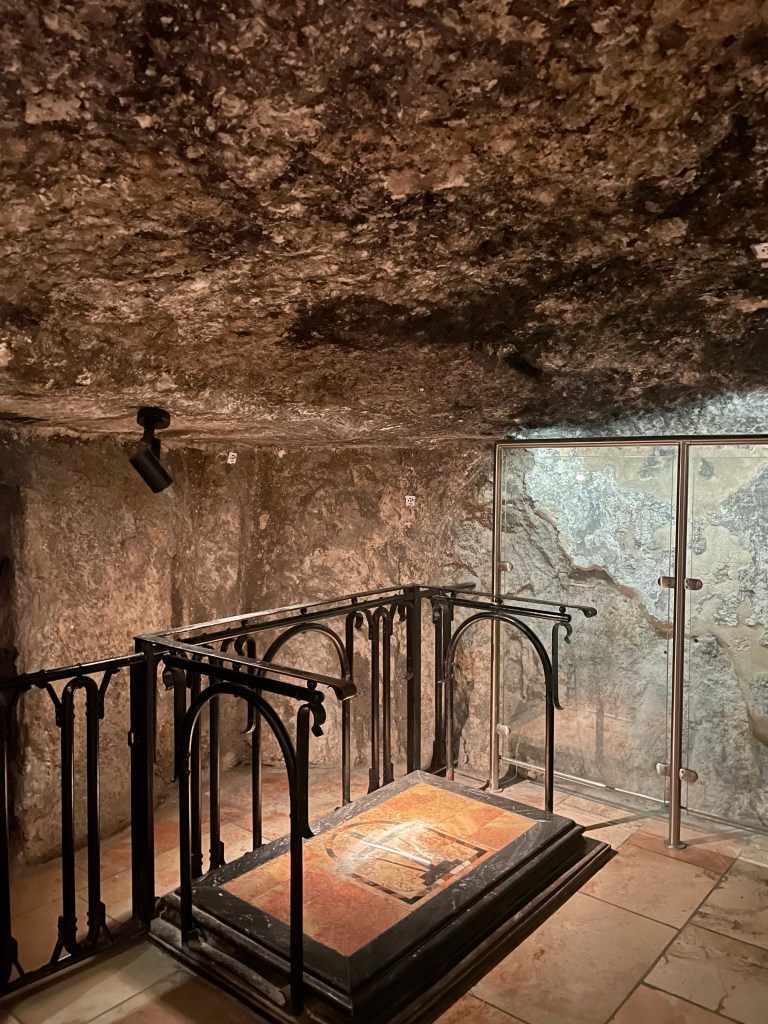
There was quite a bit of conservation work going on so you couldn’t walk all the way round the church which was disappointing and probably made it all feel more chaotic than usual!
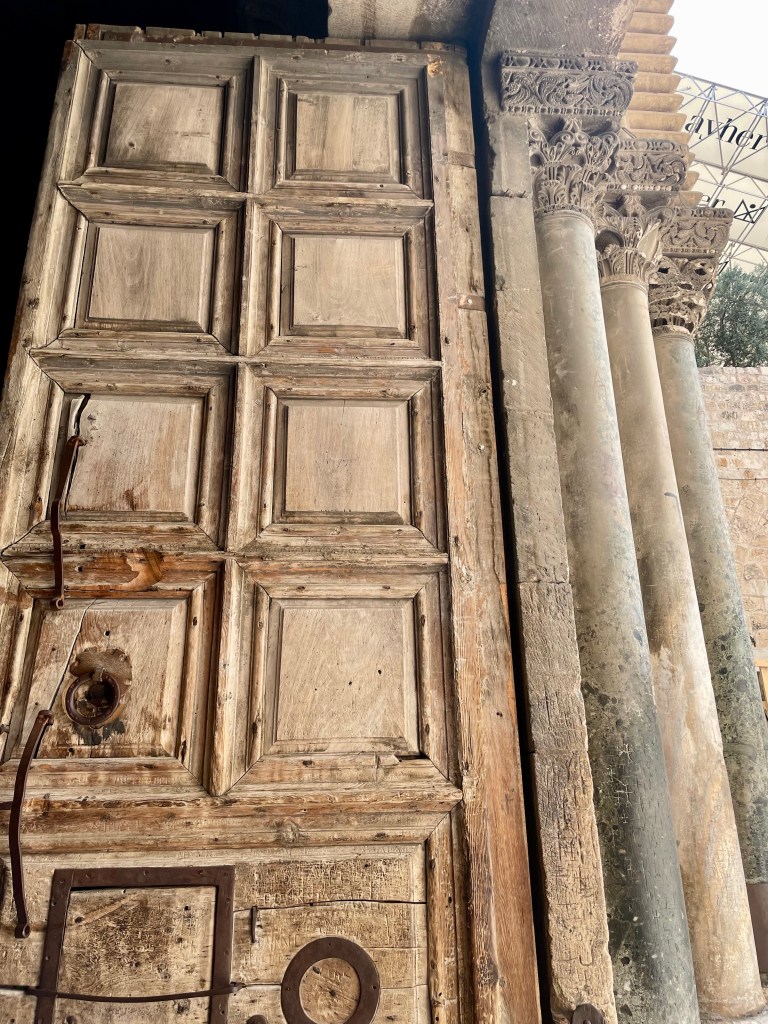
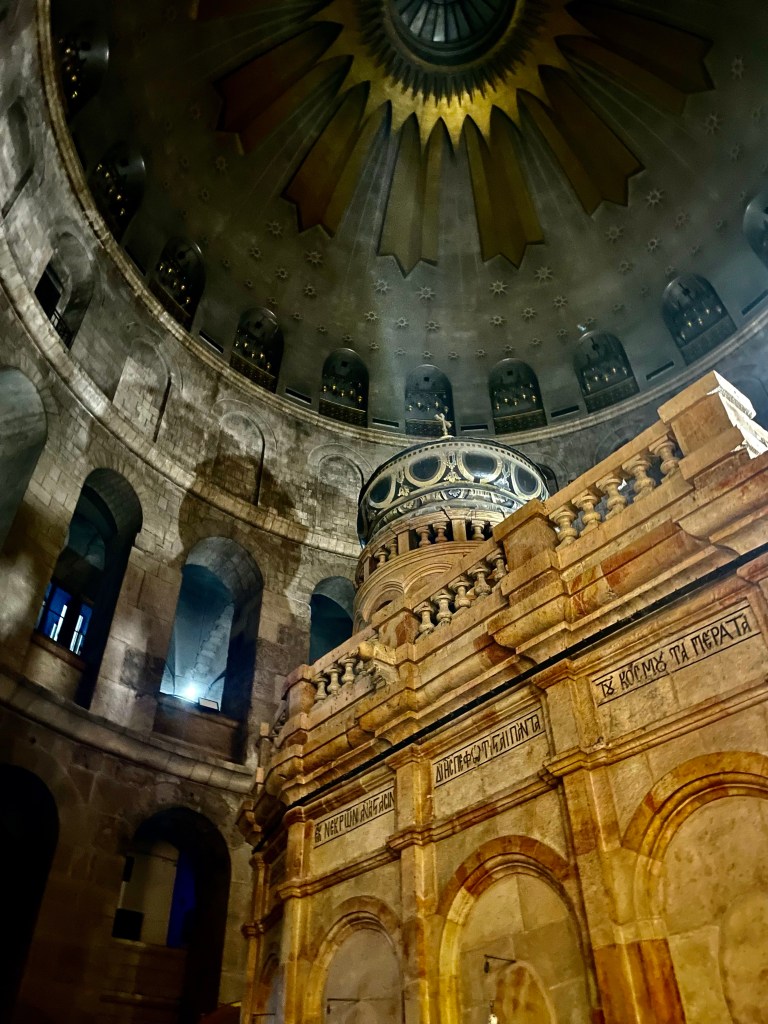
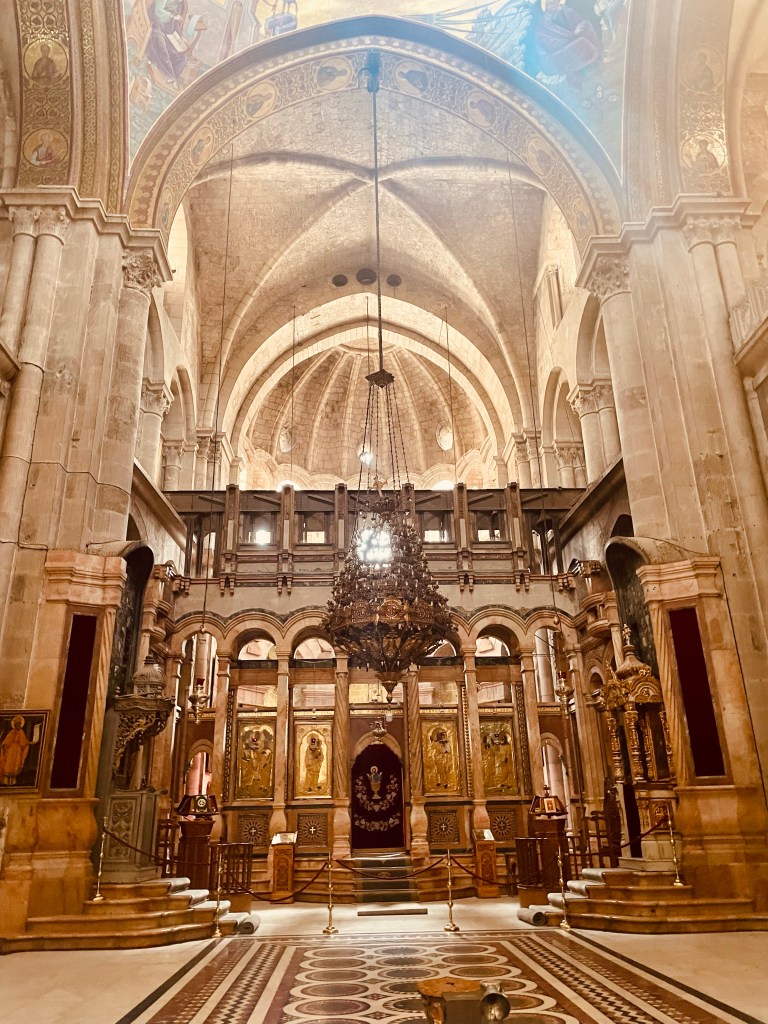
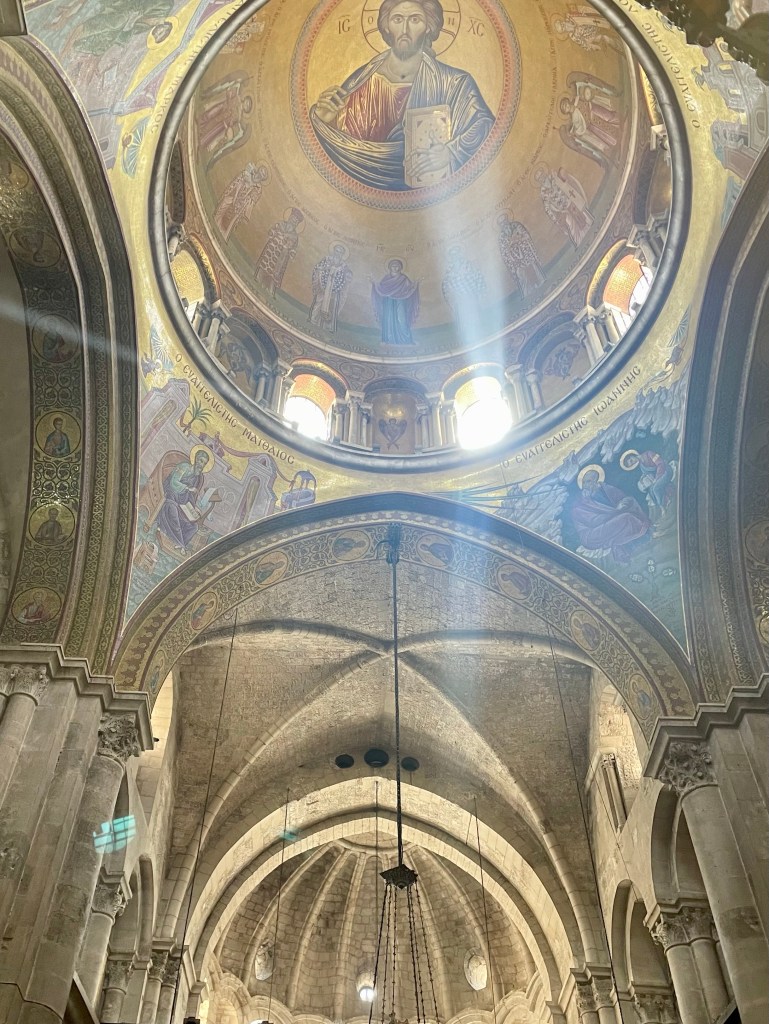
The main part of the church belongs to the Greek Orthodox Church- which is rather stunning, particularly the mosaics in the dome above, which I managed to capture with the light streaming in.
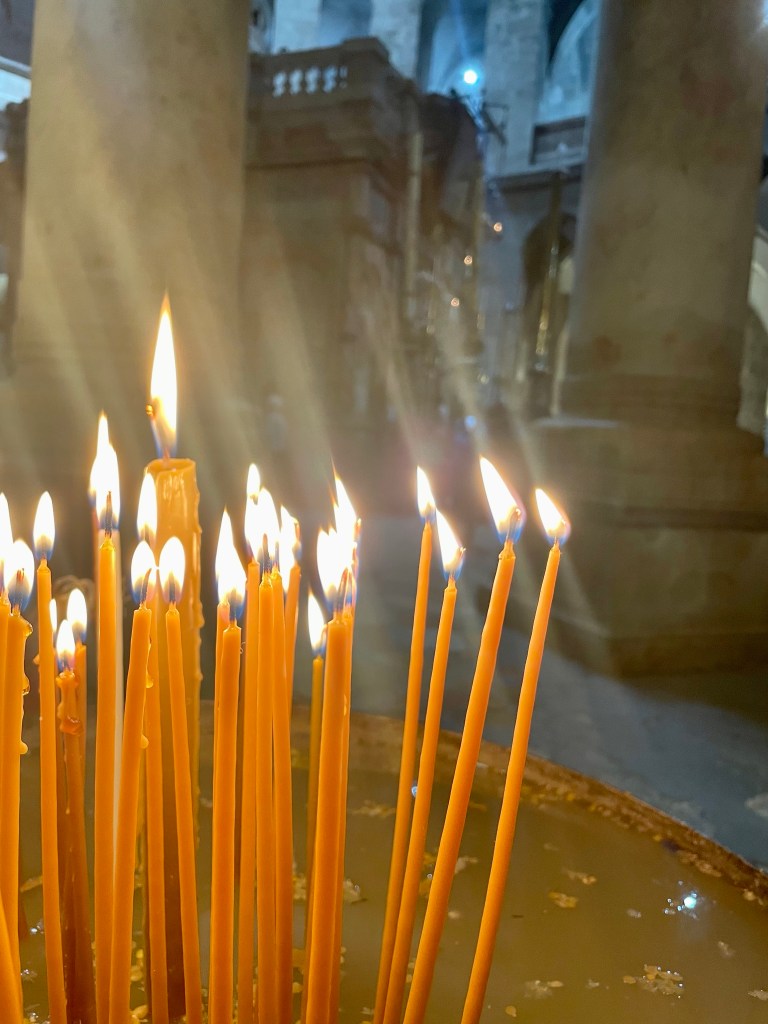
Many, many, many candles are lit in here each day with people offering prayers for loved ones, Jerusalem, peace and so on. It was fascinating to watch different traditions with the candles, and how the stubs were dealt with, with some even being stuck into water with a gravel base.
Perhaps the best part for me was going in around 8.30pm on the Thursday evening, minutes before they would close those heavy doors, to find the place nearly empty. Peace at last! I was able to visit the tomb of Jesus and pray there, which I was rather pleased that I could. With the darkness all around the church the tomb and the dome above it looked even more spectacular.
Despite the madness of the place for most of the hours of opening it is possible for find some peace here. There is also something pleasing about being able to relate to all those pilgrims from centuries ago who report a similar chaos and noise here at the Holy Sepulchre. Holiness amid chaos, perhaps that is the greatness of if all, it is almost certainly what we are called to be in this chaotic world, islands of calm and peace. Somehow.