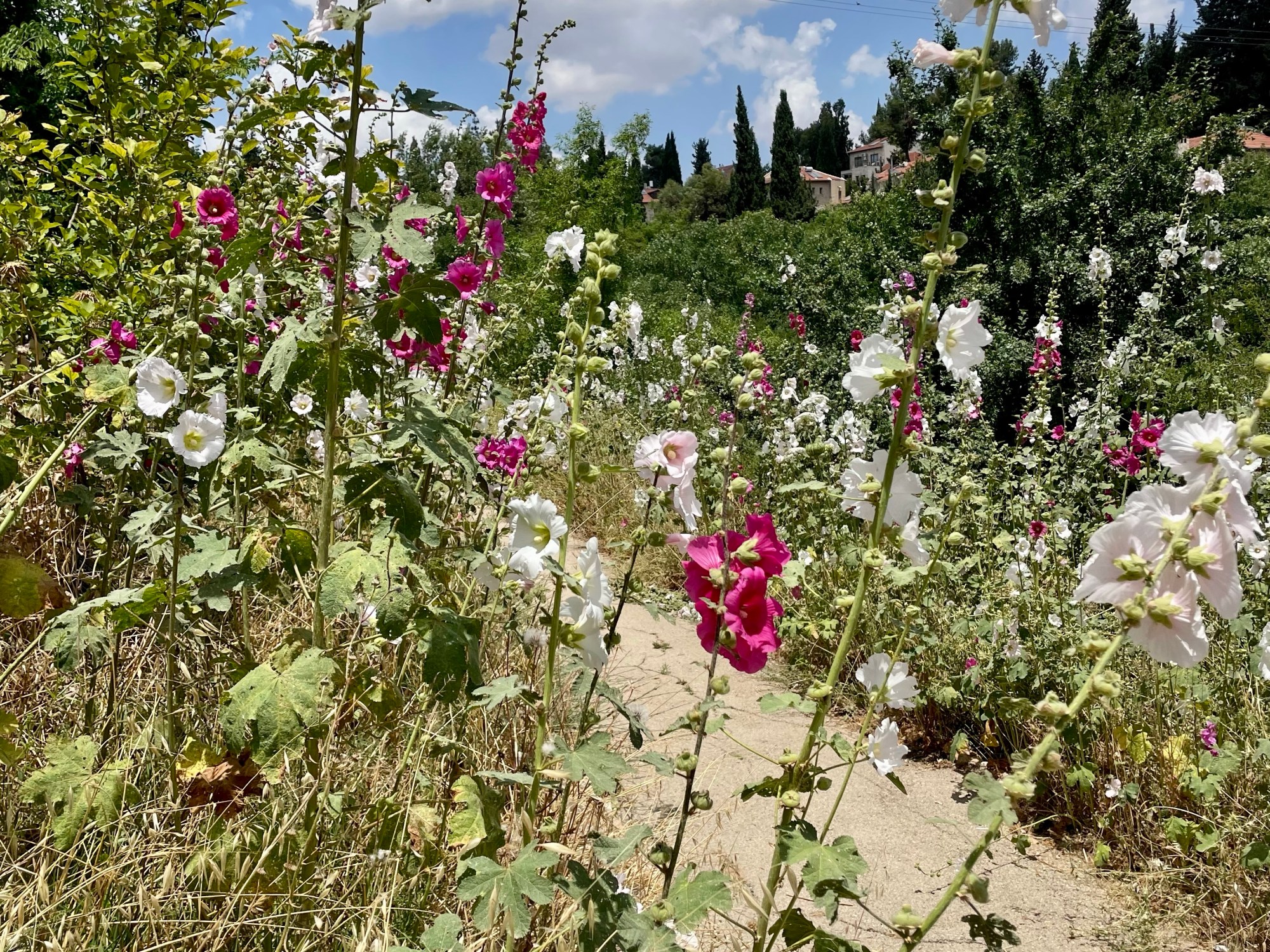
The pathway is littered with many holy locations that have been infused with the prayers of many holy people, below are just a few.
St Benedict
Born around 480 in Norcia, he was sent to Rome for his studies he was shocked by the decadent life and went to seek God. He was heavily be influenced by hermits which had arrived around Norcia in the 3rd century and lived in caves, particularly at Subiaco where on Easter Day 500 his location was divinely revealed to those seeking spiritual direction. He stayed in Subiaco for 30 years and then after a bitter jealously from a local cleric who tried to poison him with bread and tempt his monks with prostitutes, he went down to Monte Cassino to protect his spiritual sons. It was in Monte Cassino that he drafted the famous Rule of St Benedict in 540. He died just 40 days after his sister Scholastica and was buried next to her in Monte Cassino – whose tombs miraculously remained in tact after the bombing in the battle in 1944.
St Scholastica
The often forgotten about twin sister of St Benedict. From a young age she consecrated herself to God and went on to lead many others in their spiritual lives. On the path in Arpino we find next to the Collegiate Church of St Andrew the community of cloistered Benedictine nuns founded by St Scholastica. She would meet with her brother once a year and they would talk and pray together, just before she died she met with Benedict and wanted to keep talking, but he didn’t want to break his rule. So Scholastica prayed to God and the heavens opened and threw down a storm meaning he could not travel back to his monastery. Three days later when she died St Benedict saw a vision that his sister had died and went to retrieve her body.
St Rita of Cascia
At the end of the first stage the path arrives at Cascia, which is where St Rita died, near to where she was born in Roccaporena in 1381. She is known as the saint for ‘Impossible Causes’, after converting her husband, forgiving the murderers of her husband, and eventuality convincing the Abbess to accept her into the community of Santa Maria Maddalena in Cascia, due to a miraculous flying over the walls with the help of her patron saints. Such a holy woman was she that her knees wore down the stone where she frequently prayed near Cascia.
St Francis of Assisi
As the path goes through Poggio Bustone to Rieti it overlaps with the Way of St Francis who was born in Assisi around 1182. He famously forsook his families wealth for a life of poverty, preaching and helping the poor including lepers. His order of the Franciscans was recognised by Pope Innocent III in 1209 and grew into one of the largest religious orders in the world, often known as Greyfriars due to the colour of their habit.
St Thomas Aquinas
The path passes through Roccasecca which is where Thomas’ family had their home and where Thomas was born around 1225. As was common at the time he was educated by the monks at Monte Cassino before going to Naples where he discovered the Dominican order, much to the displeasure of his family. Thomas would go on to write a mere 40 books in his 49 years as well as some of the most beautiful prayers and hymns including his famous Summa Theologica as a textbook for those learning the faith.
Some local saints.
St Guiseppe da Leonessa
Born in 1556 to a family of wealth wool merchants in Leonessa. Later in life he joined the Capuchins and ordained 1580 he chose the active life and preached to the underprivileged in Umbria. It was in Constantinople where he comforted the persecuted Christians and urged them not to lose faith he tried to approach Sultan Murad III to request religious freedom for the converted. This resulted in him being arrested and sentenced to death by hanging. He was hung above a fire on a hook and angels released him and healed his wound and he returned home to spread the Gospel to the poor.
St Agostina Pietrantoni
A 19th century saint who was born into a farming family in Pozzaglia Sabina who wished to devote herself to Christ went to Rome in 1886. Whilst in Rome she worked as a nurse in the hospital of Sancto Spirito following in the steps of Ss Charles Borromeo and Philip Neri who had worked there centuries before. After making miraculous recovery from TB she largely worked with patients suffering from the same. She smiled through difficult time when religious discussion was forbidden in her work, and the nuns merely tolerated, her motto was ‘For Jesus, everything is easy.’ She was murdered as she went to work after being at mass, before she died she forgave her killer. She was canonised in 1999 by Pope St John Paul II.
St Domenico di Sora
Born in 951 in Foligno and by 974 he was a Benedictine monk and priest. After retreating to the caves for his hermit life he gained a reputation for his holiness and was given land where he built some of the earliest Benedictine monasteries. He eventually moved to Sora, near Arpino (which is on the pathway) where he built a monastery on Cicero’s birthplace, which can still be seen today and carries his name. He was a reformer of the medieval church and ahead of time in terms of re-invigorating the religious orders as Ss Dominic and Francis would follow in his steps a couple of hundred years later.
 Cammino di Maria